
7 Tips for Choosing a High Speed Packaging Machine

Choosing a high speed packaging machine is not simply a race for maximum packs per minute. It is a decision about uptime, product protection, operator safety, and long-term operating cost. PMMI’s 2024 State of the Industry report highlights labor shortages, automation needs, and pressure to improve production efficiency. Smithers’ The Future of Global Packaging to 2029 also points to continued packaging-market growth, driven by food, healthcare, and e-commerce demand.

The practical question is more specific: Can the machine maintain speed when film tension changes, product sizes vary, or a sealing jaw collects residue? A machine that reaches 300 packs per minute in a demonstration may perform differently during a twelve-hour shift. Watch the changeover. Measure cleaning time. Ask for verified output data, not impressive claims.

Dr. John Henry, a recognized packaging machinery author, offers a useful principle: “Packaging machinery is a system, not a collection of individual machines.” That view matters when comparing feeding systems, conveyors, controls, sealing units, inspection tools, and service support. A faster filler cannot compensate for unstable infeed flow. A precise wrapper still fails if spare parts arrive slowly.

Small details matter.

This guide presents seven practical tips for evaluating a high speed packaging machine. It considers throughput, compatibility, sanitation, energy use, controls, maintenance, and supplier reliability. Some recommendations may challenge the usual buying checklist. That is intentional. Speed looks attractive, but dependable performance is harder to prove.
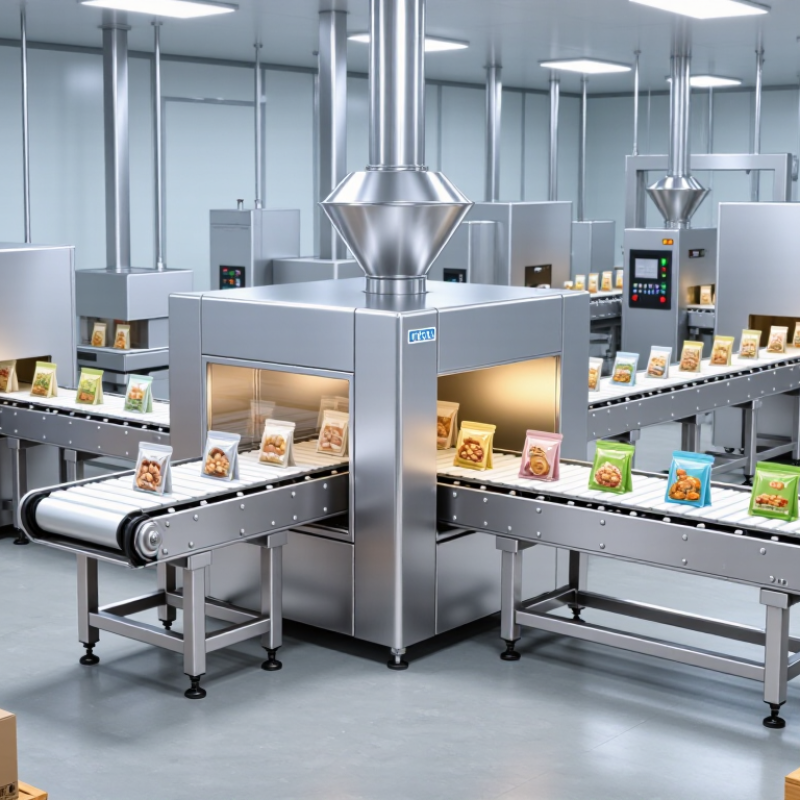
7 Tips for Choosing a High Speed Packaging Machine

Define Your Packaging Speed and Production Requirements

Choosing a high-speed packaging machine starts with a clear production baseline. Define required packs per minute, product weight, package dimensions, and operating hours. Do not trust the machine’s headline speed alone. Ask whether that figure includes changeovers, rejected packs, cleaning, and film splices. A line rated at 180 packs per minute may deliver only 145 in daily production.

Calculate demand by shift. For example, 60,000 packs across two eight-hour shifts requires about 63 good packs per minute, before planned downtime. Add a realistic safety margin, not an extreme one. PMMI industry reports repeatedly identify labor availability, uptime, and flexible production as major packaging priorities. A machine that needs constant manual adjustment may defeat its advertised speed. Small details matter, such as a three-minute film change or poorly placed sensors.

Check your product range before selecting the machine. Thin pouches, fragile snacks, dusty powders, and irregular products behave differently at high speeds. The International Federation of Robotics reported 541,302 industrial robots installed worldwide in 2023, showing the wider move toward automated production. Automation helps, but it cannot correct unstable feeding or inconsistent materials. Request a factory acceptance test using your actual product and packaging film. Measure good output, seal quality, waste, and recovery time after a jam. A faster line is not always the better investment. Sometimes, the honest answer is slower.

7 Tips for Choosing a High-Speed Packaging Machine: Define Your Packaging Speed and Production Requirements

Typical packaging line speeds vary by product type, package format, filling method, and level of automation. Use the comparison below to align the machine’s rated speed with your required production output.

How to use this chart: Select a machine with enough rated capacity to meet your target output while allowing practical time for loading, changeovers, maintenance, and minor production interruptions. A machine operating continuously at its maximum rated speed may not deliver the same effective output in daily production.

Match Machine Design to Product Type and Package Format

7 Tips for Choosing a High Speed Packaging Machine

High speed starts with product behavior, not motor power. A fragile biscuit needs gentle transfers, while powdered products require controlled airflow and sealing pressure. PMMI’s 2023 U.S. Packaging Machinery Shipments Report valued the market above 10 billion dollars, showing strong demand for automated output. Yet speed without format control can create costly waste.

Tip 1: Match the dosing system to product density and flow.
Tip 2: Select forming tools around package width, depth, and seal area.
Tip 3: Test real product samples, including broken pieces and seasonal changes. A clean laboratory sample can mislead.
Tip 4: Check whether changeover parts support every planned format. Five-minute adjustments look attractive, but repeatability matters more.

Smithers’ 2024 packaging market analysis projects continued growth in flexible packaging, driven by convenience and portion formats. That trend increases pressure on film handling and seal consistency.

Tip 5: Confirm the machine’s film tension range and sealing temperature control.
Tip 6: Compare rated speed with usable speed after rejects, cleaning, and format changes.
Tip 7: Request factory acceptance tests using your own materials. Measure good packs per minute, not only cycles per minute.

Operators should also inspect access points, guarding, and control visibility. I have seen impressive trial speeds fall sharply during long production runs. That gap deserves honest review.

Evaluate Automation Features, Accuracy, and Operating Flexibility

A high-speed packaging machine should be judged beyond its advertised speed.
The 2024 Smart Manufacturing and Operations Survey reports that 92% of manufacturers view smart manufacturing as a major competitiveness driver within three years. That makes automation features important, but only when they improve real production.

Tip 1: Check servo-driven motion, recipe control, and automatic changeover.
Tip 2: Request line-speed data using your actual film, product, and pack size.
A factory trial is more reliable than a brochure.

Accuracy protects materials and customer trust.
Tip 3: Measure fill, seal, label, and reject accuracy separately.
Tip 4: Confirm sensor response and calibration intervals.
Tip 5: Review traceability, alarm history, and data export functions.
The 2023 Packaging Machinery Industry report identifies labor availability and equipment integration as continuing investment concerns. A machine that runs quickly but creates frequent manual checks may not reduce labor.
I have seen this gap appear during short production runs.

Operating flexibility matters when orders change.
Tip 6: Test tool-free adjustments, small-batch recipes, and multiple package formats.
Tip 7: Ask operators to complete a changeover while wearing normal protective equipment.
It should feel practical.
Also inspect access points, cleaning time, and training needs. The 2024 Global State of Quality Report links stronger process control with fewer quality failures, yet automation cannot fix poor setup data.
That is an uncomfortable point. Leave room for human review, because actual production is rarely as tidy as a demonstration.

Compare Sanitation, Maintenance, Safety, and Equipment Durability

Choosing a high-speed packaging machine requires more than checking its hourly output. In production, small hygiene failures can stop an entire line. Tip one: inspect product-contact surfaces for stainless steel, smooth welds, and rounded corners. Avoid hidden ledges. Ask whether operators can remove belts, guards, and filling parts without special tools. Run a dry cleaning trial, then inspect trapped powder, moisture, or oil beneath the frame. A clean machine supports product quality and audit readiness.

Tip two: request a clear lubrication schedule and a documented spare-parts list. Tip three: check access to sensors, seals, cutters, and drive components. If a technician needs half a shift to reach one sensor, downtime becomes expensive. Tip four: compare preventive maintenance alerts, diagnostic displays, and service records. These features help teams identify repeated faults instead of guessing. I have seen impressive output targets hide poor maintenance access. That mistake is easy to repeat.

Safety must be tested at operating speed, not only during a demonstration. Tip five: verify interlocks, emergency stops, guarding, and safe changeover procedures. Tip six: observe noise, heat, vibration, and film movement during a full production cycle. Unusual vibration often appears before a major failure. Tip seven: assess frame rigidity, corrosion resistance, component quality, and upgrade options. Choose equipment that tolerates daily washing, frequent adjustments, and continuous loads. Ask for measurable test results, not broad promises. Durability is proven on the factory floor.

7 Tips for Choosing a High Speed Packaging Machine - Compare Sanitation, Maintenance, Safety, and Equipment Durability

Tip Decision Dimension Recommended Benchmark or Design Feature What to Verify Before Purchase Why It Matters at High Speed
1 Evaluate hygienic design Use smooth, cleanable surfaces with minimal crevices, exposed threads, product traps, and horizontal ledges. Food-contact parts are commonly specified in stainless steel, with 304 used for many general applications and 316 preferred where chloride exposure or aggressive cleaning chemicals are significant. Smooth welds Drainable surfaces No product traps
Request hygienic-design documentation aligned with recognized principles such as ISO 14159 or EN 1672-2 where applicable.
Poor hygienic design can retain food residue, increase cleaning time, and create contamination risks that become more difficult to control as production volume increases.
2 Match sanitation protection to the cleaning method Select enclosure and component protection according to the actual washdown process. IP65 provides dust protection and protection against water jets; IP69K is intended for demanding high-pressure, high-temperature washdown conditions when the complete equipment design supports it. Confirm the IP rating of motors, sensors, control panels, connectors, and cable glands individually. Check whether the machine is approved for dry cleaning, low-pressure washdown, or high-pressure washdown. An enclosure rating alone does not make an entire machine washdown-safe. Incompatible seals, cable entries, or electrical components may lead to corrosion, water ingress, and unplanned downtime.
3 Compare cleaning and changeover time Prefer tool-less or quick-release product-contact parts, removable guards where safe, open-access frames, and clearly separated product and non-product zones. The best machine is the one that meets the required throughput while minimizing total sanitation and changeover time. Observe a complete cleaning and format-change demonstration using the intended product. Record the number of tools, operators, removable parts, steps, and minutes required. A machine with a high nominal speed may deliver lower effective output if cleaning, inspection, and product changeovers are slow or require extensive disassembly.
4 Assess maintenance accessibility Choose accessible lubrication points, clearly marked wear parts, diagnostic displays, modular assemblies, and readily replaceable belts, knives, seals, sensors, and heating elements. Preventive-maintenance tasks should be documented with defined intervals. Ask for the preventive-maintenance schedule, spare-parts list, fault-history functions, and average replacement procedures. Verify that routine service can be performed without removing major machine structures. Difficult access increases mean time to repair and may encourage maintenance shortcuts, causing repeated stoppages, inconsistent sealing, and premature component failure.
5 Verify guarding and functional safety The machine should include fixed guards, interlocked access doors, emergency-stop devices, safe restart logic, and protection from crushing, cutting, drawing-in, hot-surface, and electrical hazards. Safety functions should be validated for the intended risk level. Request a documented risk assessment and safety validation. Check whether the design follows applicable requirements such as ISO 12100, ISO 13849-1, and IEC 60204-1, together with local legal requirements. High-speed conveyors, sealing jaws, knives, and indexing mechanisms can create serious hazards. Safety systems must prevent access to dangerous motion and must not be easily bypassed during production.
6 Check control, monitoring, and reject management Look for recipe control, alarm history, speed and temperature monitoring, film-tracking control, seal-quality checks, and automatic rejection of defective packages where required. Data should be understandable to operators and maintenance personnel. Test the machine with representative film, product sizes, and operating speeds. Confirm how it detects missing product, incorrect registration, open seals, temperature deviation, and repeated faults. Without reliable monitoring, a machine may continue producing defective packages at high speed, increasing material waste, rework, customer complaints, and recall exposure.
7 Measure durability and total cost of ownership Compare frame rigidity, bearing and drive selection, corrosion resistance, thermal management, component service life, spare-parts availability, energy use, and warranty terms. Evaluate performance over the complete production life rather than purchase price alone. Request documented factory acceptance-test results, maximum continuous operating conditions, recommended spare parts, expected service intervals, utility consumption, and references for similar duty cycles without relying on brand-specific claims. Undersized drives, inadequate cooling, unsuitable seals, and weak frames can cause vibration, registration errors, seal defects, and accelerated wear during continuous high-speed operation.
Selection note: Compare machines using effective output, sanitation time, changeover time, safety validation, maintenance requirements, reject rate, energy consumption, and expected service life—not rated speed alone. Applicable food, workplace-safety, electrical, and machinery requirements vary by product, process, and installation location.

Review Total Costs, Supplier Support, and Future Expansion Options

Choosing a high-speed packaging machine requires more than comparing purchase prices. Review total costs from installation to daily operation. Ask for a written estimate covering tooling, conveyors, sensors, training, spare parts, and software updates. A lower-priced machine may need frequent adjustments or specialized film. That difference appears later in waste and downtime. Measure it.

During a factory evaluation, request cycle data under your actual product conditions. Check power consumption, changeover time, reject rates, and cleaning labor. A ten-minute changeover saving can matter more than a faster headline speed. Calculate cost per packed unit across several production volumes. Include technician travel, emergency service, and inventory carrying costs. I would also test the machine after a long run, not only during a polished demonstration. Demonstrations can hide small interruptions.

Supplier support deserves equal attention. Confirm response times, remote diagnostics, local service coverage, and operator training. Request references from facilities with similar shifts and packaging materials. Discuss expansion before signing. The control system should allow additional lanes, feeders, inspection devices, or recipes without replacing the main frame. Leave floor space, electrical capacity, and network ports for growth. Still, expansion claims need proof. Ask for upgrade prices, lead times, and a written compatibility statement. My own planning mistake was reserving too little room around a machine, making maintenance awkward. That lesson changed how I review layouts.

Before you go

Leave your projects details, and one of our team will reach out to answer any questions you may have