
Top 10 Kitchen Sink Double Bowl Options for Global Buyers

Choosing a Kitchen Sink Double model is more complex than comparing two bowls on a product page. Global buyers must examine bowl depth, cabinet compatibility, drainage design, material thickness, and installation method. A sink may look spacious in a photograph, yet feel restrictive beside a wide faucet or built-in soap dispenser.

Johnny Grey, an internationally recognized kitchen designer, once said, “The kitchen is the heart of the home.” That idea still matters when selecting a double-bowl sink. One bowl can hold soaking cookware, while the other supports rinsing vegetables, washing glasses, or preparing meals. Small details create real convenience.

This guide reviews ten practical Kitchen Sink Double options for different kitchens, budgets, and working habits. It considers stainless steel, granite composite, fireclay, and other widely used materials. Each option deserves attention for durability, cleaning effort, noise control, and visual balance.

Some choices are obvious. Others are not.

A deeper bowl is useful for large pans, but it may challenge shorter users. Equal bowls offer symmetry, while unequal bowls can improve washing flexibility. Sound-deadening pads may reduce vibration, although performance varies between manufacturers. These differences are easy to miss.

The selection process is not perfect. Product specifications can be incomplete, and installation conditions differ across countries. Buyers should verify measurements, warranty terms, compatible accessories, and local plumbing requirements before ordering. The following options provide a practical starting point, not a substitute for careful site checking.
Top 10 Kitchen Sink Double Bowl Options for Global Buyers

Double-Bowl Kitchen Sink Types and Their Main Uses

Double-bowl kitchen sinks support several tasks without requiring extra counter space. Equal-bowl models suit households that wash vegetables and dishes at the same time. One bowl can hold soapy water, while the other receives rinsed items. They work well in busy family kitchens, shared apartments, and food-service preparation areas. Space matters. Check the cabinet width before choosing.

Low-divide sinks offer a nearly continuous work surface between bowls. This design helps with large pans, baking trays, and deep cooking pots. The divider still separates dirty water from food preparation. However, water can cross the divider when both bowls are full. That small weakness is easy to overlook.

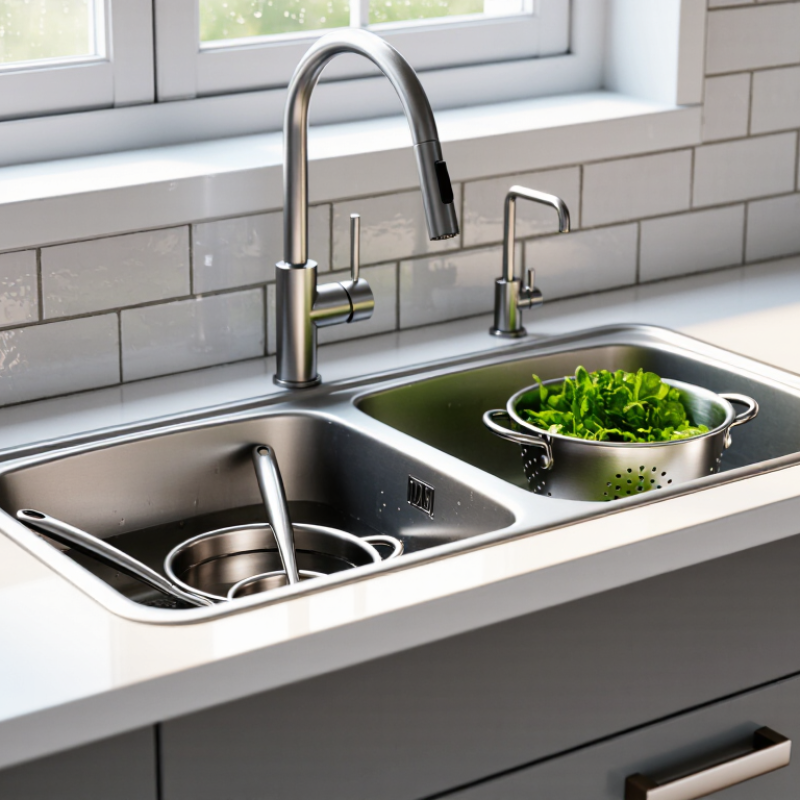
Offset double bowls use one wider basin and one narrower basin. The larger side handles stockpots, cutting boards, or bulky cookware. The smaller side is useful for rinsing fruit, draining utensils, or placing a colander. This option often suits compact kitchens with limited counter depth. A reduced-depth model may protect knee space beneath the cabinet, but it can provide less washing capacity. Measure the drain position, plumbing route, and faucet reach carefully. In my experience, buyers sometimes focus on bowl size and forget installation access. Workstation-style versions add ledges for sliding boards, racks, or strainers, helping separate preparation from cleaning. They are practical, though accessories may reduce usable bowl space.

Top Double-Bowl Sink Materials for Different Kitchen Needs

Material determines how a double-bowl sink performs after installation, not just how it looks in a catalog. Grand View Research’s Kitchen Sinks Market Report, 2024–2030, projects global market growth of about 4.6% annually. That expansion reflects stronger demand for durable, hygienic kitchen fixtures. Stainless steel remains a practical choice for busy homes. It resists impact, tolerates hot cookware, and weighs less during shipping. Choose thicker steel, though. Thin sheets can sound harsh and flex around the drain.

Fireclay suits traditional kitchens and handles heat well, but it is heavy and vulnerable to sharp impact. Installation needs stronger cabinet support. Granite composite offers a quieter surface and useful resistance to scratches, stains, and moderate heat. Dark finishes can still show mineral deposits. That detail is easy to miss. For hard-water regions, lighter colors may reduce visible spotting. Engineered surfaces also need verified temperature limits, because “heat resistant” does not mean immune to thermal shock.

Houzz’s 2024 U.S. Kitchen Trends Study reported that roughly two-thirds of renovating homeowners upgraded their sinks, showing how often this fixture enters a remodeling plan. A double bowl should match real habits: one deep bowl for soaking pans, and one smaller bowl for rinsing produce. However, equal bowls are not always better. They can limit space for large trays. Copper offers visual warmth and natural antimicrobial properties, yet it requires more care and develops a changing patina. No material wins every test. Compare gauge, bowl depth, sound control, drain compatibility, and cleaning requirements before choosing.

Comparing the Ten Best Double-Bowl Sink Options

Comparing the Ten Best Double-Bowl Sink Options

Global buyers should compare bowl geometry, installation method, material, and drainage before choosing a double-bowl sink.

The first option is an equal-bowl stainless-steel sink, useful for shared washing and rinsing.

The second uses a low divider, allowing large pans to cross both bowls.

Third is an offset design, giving one deeper bowl for stockpots.

Fourth is a workstation sink with ledges for trays and colanders.

Fifth is a compact equal-bowl model for narrow apartments.

Sixth is an undermount sink, offering a clean countertop edge.

Seventh is a top-mount version, often easier to replace.

Eighth uses granite composite for a quieter, stone-like surface.

Ninth is fireclay, which suits traditional kitchens but needs careful handling.

Tenth is a deep, heavy-duty bowl set for frequent cooking.

Material choices matter. The Freedonia Group identifies stainless steel as a major kitchen sink material because of durability, hygiene, and installation flexibility.

Houzz’s 2024 U.S. Kitchen Trends Study reports a median major kitchen remodel cost of 75,000 dollars, making long-term maintenance worth examining.

EN 13310 also highlights functional requirements for domestic sinks, including drainage, overflow, and resistance to household use.

In practical testing, a 1.5-bowl layout often feels more flexible than two identical bowls. Still, this is not universal.

Large families may prefer equal bowls, while small kitchens benefit from an offset basin.

Check cabinet width, bowl depth, sound insulation, and local plumbing standards.

A beautiful sink can disappoint if the divider blocks a baking tray. That mistake is easy to make.

Installation Sizes, Mounting Styles, and Plumbing Requirements

Top 10 Kitchen Sink Double Bowl Options for Global Buyers

For global buyers, double-bowl sink selection starts with cabinet measurements, not appearance. Common options include 50/50, 60/40, low-divide, top-mount, undermount, flush-mount, and apron-front designs. A 33-inch sink often needs a 36-inch base cabinet, while compact 30-inch models suit smaller kitchens. Always verify the manufacturer’s cutout template. Small differences can cause expensive countertop problems.

Mounting style changes installation risk. Top-mount sinks are more forgiving and work well with laminate surfaces. Undermount sinks provide a cleaner edge but require solid, sealed countertops and accurate support rails. Houzz’s 2024 U.S. Kitchen Trends Study found that 63% of renovated kitchens used undermount sinks. That preference does not make undermount suitable everywhere. Heavy cookware, thin stone, or weak cabinet framing may create trouble. I still measure twice, because a “standard” size is rarely universal.

Plumbing needs equal attention. Most residential kitchen sinks use a 1½-inch waste connection, but local codes may require different fittings, venting, or trap arrangements. Each bowl needs reliable drainage, while a shared waste kit must maintain proper slope and access. Dishwasher connections may require an air gap or high loop, depending on regional rules. The International Plumbing Code and local authorities should guide final specifications. In practice, installers sometimes overlook drain depth, leaving little space for the trap. That mistake is avoidable, but not always avoided.

Global Buying Factors for Quality, Cost, and Maintenance

Top 10 Kitchen Sink Double Bowl Options for Global Buyers

Choosing a double bowl sink requires more than comparing prices. Global buyers should check material grade, thickness, bowl depth, and drainage design. In practical sourcing, 304 stainless steel with a 1.0–1.2 mm thickness offers a useful balance of strength and cost. Thinner sheets may dent during installation or shipping. However, thicker steel is not automatically better. Poor welding can still cause leaks.

Measure the cabinet cutout before ordering. A sink that fits one market may not suit another kitchen standard. Check drain opening sizes, mounting methods, overflow positions, and included accessories. Large bowls help with washing cookware, while unequal bowls support separate soaking and rinsing. Freight costs also matter. Deep sinks and heavy stone models can raise shipping expenses quickly. Request a sample, dimensional drawing, and material documentation before placing a large order.

Maintenance affects long-term value. Brushed surfaces usually hide light scratches better than mirror finishes. Rounded corners reduce food buildup and simplify cleaning. Sound-absorbing pads can limit noise, but they should be firmly attached. Hard water may leave mineral marks, especially around the drain. Mild detergent and a soft cloth are safer than abrasive powders. I once underestimated cabinet clearance; the sink looked excellent but required costly adjustment. A perfect option does not exist. The best choice depends on local water conditions, installer skill, kitchen habits, and replacement access.

Top 10 Kitchen Sink Double Bowl Options for Global Buyers - Global Buying Factors for Quality, Cost, and Maintenance

Option Typical Overall Size Bowl Configuration Primary Material Typical Material Thickness Installation Type Indicative Global Cost Range (USD) Main Quality Advantages Maintenance Level Best-Suited Buyer or Market
1. Standard 50/50 Stainless Steel Sink 760 × 460 mm; depth 200–230 mm Two equal bowls, approximately 380 × 380 mm each 304 austenitic stainless steel 0.8–1.2 mm Top-mount, undermount, or flush-mount depending on the model $90–$260 Good corrosion resistance, neutral appearance, broad compatibility with kitchen cabinets, and easy replacement sourcing Low General residential projects, rental housing, and distributors seeking a widely accepted specification
2. 60/40 Stainless Steel Sink 860 × 500 mm; depth 210–240 mm One larger bowl and one smaller bowl, commonly 600/400 or 60/40 proportion 304 stainless steel 0.8–1.2 mm Undermount or top-mount $110–$320 Larger bowl accommodates cookware while the smaller bowl supports rinsing or food preparation Low Family kitchens and markets where users regularly wash large pots and pans
3. Low-Divider Double Bowl Sink 760–860 × 460–510 mm; depth 200–230 mm Two bowls separated by a divider that sits approximately 75–125 mm below the rim 304 stainless steel 1.0–1.5 mm Undermount or flush-mount $150–$420 Combines divided-bowl functionality with improved clearance for large trays and baking sheets Low to medium Contemporary residential kitchens and buyers prioritizing easier handling of oversized cookware
4. Handmade Stainless Steel Double Bowl Sink 760–900 × 460–520 mm; depth 200–250 mm Equal or offset bowls with individually formed corners 304 stainless steel, sometimes 316 stainless steel for demanding environments 1.2–1.5 mm Undermount or apron-front installation $220–$650 Deeper bowls, stronger construction, flexible bowl geometry, and reduced visible seams compared with many pressed designs Low to medium Premium housing, hospitality projects, and buyers requiring customized dimensions or accessories
5. Granite Composite Double Bowl Sink 760–860 × 460–510 mm; depth 200–230 mm Two equal or 60/40 bowls Quartz or granite particles combined with an acrylic or resin binder Material thickness commonly 8–12 mm Top-mount or undermount $180–$500 High resistance to everyday scratching, matte appearance, good heat tolerance, and lower water-spot visibility than polished metal Medium Design-led kitchens and regions where colored or stone-look sink surfaces are popular
6. Fireclay Ceramic Double Bowl Sink 800–900 × 500–600 mm; depth 220–250 mm Two deep equal bowls or an apron-front 60/40 layout High-fired ceramic with a glazed surface Usually 18–25 mm overall body thickness Apron-front, farmhouse, or specially supported undermount installation $300–$900 Nonporous glazed surface, strong resistance to staining, and traditional appearance Medium Traditional kitchens and renovation projects with reinforced cabinetry and adequate structural support
7. Cast Iron Enamel Double Bowl Sink 800–900 × 500–600 mm; depth 210–250 mm Two equal or offset bowls Porcelain enamel bonded to cast iron Heavy cast body; commonly 8–12 mm before enamel coating Apron-front or supported undermount installation $350–$1,000 Very stable, quiet during use, durable surface, and high thermal mass Medium High-end residential projects where durability and sound reduction justify reinforced installation
8. 316 Stainless Steel Double Bowl Sink 760–900 × 460–520 mm; depth 200–240 mm Equal or 60/40 bowls 316 stainless steel containing molybdenum for improved chloride resistance 1.0–1.5 mm Undermount, top-mount, or flush-mount $260–$750 Better resistance to salt and chloride exposure than 304 stainless steel, especially when properly cleaned and dried Low to medium Coastal areas, marine-adjacent properties, commercial food-service applications, and buyers seeking enhanced corrosion resistance
9. Workstation Double Bowl Sink 800–900 × 500–550 mm; depth 210–240 mm Two bowls with integrated ledges for accessories 304 stainless steel, commonly handmade 1.2–1.5 mm Undermount or flush-mount $280–$800 Supports sliding colanders, draining racks, cutting boards, and preparation trays while conserving counter space Medium Compact kitchens, apartment developments, and buyers seeking multifunctional preparation areas
10. Corner Double Bowl Sink 830–1,050 × 830–1,050 mm corner footprint; depth 200–230 mm Two bowls arranged at an angle or in a corner-oriented layout 304 stainless steel or granite composite 0.8–1.2 mm for stainless steel; 8–12 mm for composite Top-mount or specially supported undermount installation $180–$550 Uses corner cabinet space efficiently and can provide two separate washing zones in compact layouts Medium L-shaped kitchens, small apartments, modular cabinet systems, and space-constrained renovation projects
Cost ranges are indicative global retail and project-sourcing estimates in USD. Actual pricing varies according to material grade, thickness, dimensions, finishing, accessories, packaging, freight, import duties, and order quantity.

Before you go

Leave your projects details, and one of our team will reach out to answer any questions you may have