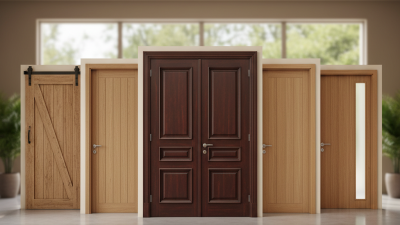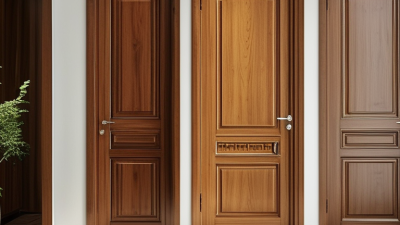
Choosing timber doors for an international project involves more than comparing catalogue photographs. Buyers must assess species, moisture control, joinery, finish durability, testing evidence, production capacity, and delivery reliability. A beautifully grained sample can still disappoint if the finished door twists after installation.
The resource context matters, too. The FAO’s Global Forest Resources Assessment 2020 estimates that forests cover 4.06 billion hectares, or about 31% of the world’s land area. That figure describes forest extent, not the sustainability of any particular product. Buyers should therefore request clear sourcing information and relevant chain-of-custody documentation. Details matter.
Architect and mass-timber advocate Michael Green has said, “Wood is the only major building material that grows naturally.” His observation captures timber’s distinctive appeal, but natural origin alone does not guarantee quality or responsible sourcing. Procurement still calls for careful checks.
This guide compares ten timber door suppliers for global buyers, focusing on practical signals: product range, customization, quality controls, certifications, export experience, lead times, and after-sales support. Where claims are difficult to verify independently, they should be treated cautiously. That is not a flaw in the comparison; it is a reminder that supplier information can be uneven. Use the shortlist to identify candidates, then confirm specifications, samples, and project requirements directly before placing an order.
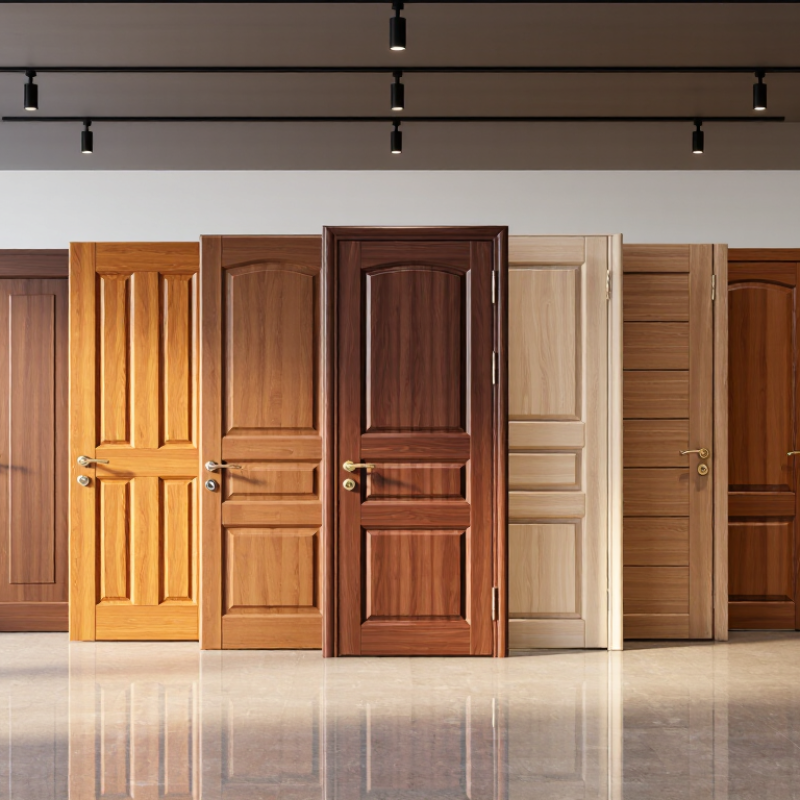
Timber doors are commonly specified as internal doors or external pedestrian doorsets. Construction also matters. Solid-timber leaves show natural grain and may move with humidity; engineered cores can improve dimensional stability. Glazed, panelled, and flush designs serve different needs. Check the full doorset, not just the leaf: frame, seals, glazing, and hardware affect performance.
FAO’s Global Forest Products Facts and Figures 2023 reports about 4 billion cubic metres of roundwood production worldwide in 2022. That figure covers many uses, not door manufacturing, but it shows why buyers should verify timber origin and product specifications. EN 14351-1 covers windows and external pedestrian doorsets. It provides a framework for declaring characteristics such as air permeability, watertightness, wind resistance, and thermal transmittance. Fire and smoke-control performance is outside its scope. For European projects, confirm the applicable standard version and required product documentation. Compare declared values for the same size and configuration; test results may not transfer to a larger glazed door. Installation matters too. A good datasheet cannot compensate for poor sealing on site.
A scope guide for buyers comparing timber door products against the European product standard.
EN 14351-1 covers external pedestrian doorsets, including timber doorsets. Fire- and smoke-control doorsets require EN 16034 in conjunction with the relevant product standard. Internal pedestrian doors are outside EN 14351-1, while garage doorsets are covered by EN 13241. The chart shows standard applicability, not product quality or market share.
¹ Fire- and smoke-control performance is addressed through EN 16034 together with the relevant product standard.
For global timber door buyers, certificates matter only when they match the goods being shipped. FSC or PEFC Chain of Custody certification tracks certified material through defined supply-chain steps; it does not mean every door is certified. Ask for a current certificate, a scope covering the relevant products and production sites, and the exact claim used on sales documents. Verify the certificate independently rather than relying on a PDF. Then compare the invoice, packing list, labels, species, and batch numbers. Small mismatches matter. Ask whether any component preparation or finishing is subcontracted, and how certified claims are maintained across those steps.
ISO 9001 indicates a quality management system, not product certification, timber origin, or forest stewardship. Check the certificate’s validity, factory address, scope, and issuing body. An office certificate may not cover the production site. Request practical records: incoming moisture checks, kiln-drying controls, dimensional tolerances, and final inspection results. For a sample order, measure door thickness and squareness against the agreed specification, then keep photos and batch identifiers. Paperwork is useful, but not magic. A certificate can leave gaps between office records and factory practice, so ask specific questions before placing a large order.
Top 10 Suppliers Compared by Timber Species and 8–12% Moisture Content
Comparing timber door suppliers takes more than checking price and lead time. Review which species each supplier can document, such as oak, pine, meranti, or walnut. Species differ in grain, weight, durability, and movement after installation. Ask whether the quoted door uses solid timber, engineered components, or both. Clear specifications matter.
An 8–12% moisture-content range can be a useful comparison point, but it is not a universal guarantee of performance. Local climate, indoor heating, and storage conditions affect how timber behaves. Request recent moisture readings, the measurement method, and the reading location on the door or sample. A dependable supplier should explain how doors are dried, packed, and acclimatized before installation. Check that the stated range applies to the finished product, not only the incoming boards.
Tips: Compare suppliers using the same species and door construction. Ask for a small sample and inspect its grain, joints, and finish in natural light. Verify readings with a calibrated meter when possible. One number cannot tell everything. Even a careful comparison may miss variation between batches, so record agreed tolerances in the purchase specification.
For global buyers, compare verified performance data, not just claims on a product sheet. A lower U-value generally means less heat passes through the door. Check the units, test method, and whether the figure covers the complete doorset, including its frame and threshold. A center-panel result may not describe the installed door. Small details matter.
Tips: Request the full test report, its date, and the tested door configuration. Match the reported dimensions, glazing, seals, and hardware to your specification. Keep the documents with the purchase records.
Fire ratings apply to tested assemblies, not an isolated door leaf. Confirm the rating duration and whether the report covers the frame, hinges, latch, glazing, and seals you plan to use. ASTM and EN methods are not automatically interchangeable, so ask for the exact standard and edition behind each result. A neat summary sheet can still leave gaps; I would check the underlying report, especially when project details differ from the tested specimen.
Global buyers comparing timber door suppliers should treat minimum order quantity as a production variable, not merely a sales threshold. Ask whether the MOQ applies per model, finish, size, or hardware set. A 100-door order may become separate production runs when finishes differ. Request a pilot batch and written tolerances for moisture, dimensions, and veneer matching. Small details matter.
UNCTAD’s Review of Maritime Transport 2024 reports that maritime trade grew 2.4% in 2023. Freight timing and cost deserve close attention. Compare FCA, FOB, and CIF only after specifying the named place or port and confirming who books carriage. Under Incoterms 2020, delivery points affect risk transfer and cost responsibilities; the rules do not settle payment terms, product quality, or ownership. A neat quotation can still leave gaps.
ISPM 15 applies to solid-wood packaging, not the timber door itself. Specify compliant treatment for wooden crates or pallets, and require a legible treatment mark before dispatch. Ask the supplier to send loading photos and confirm packaging details with the freight forwarder. Processed wood packaging may qualify for exemptions, so verify the material rather than assuming every crate follows the same rule. One overlooked stamp can delay a shipment.
The profiles below represent common sourcing regions and product specializations, not named or ranked companies. MOQ figures are indicative planning ranges, not verified supplier quotations; confirm them directly for the specified design, finish, dimensions, and order mix.
| Profile | Typical Sourcing Region | Timber Door Focus | Indicative MOQ for Planning | Incoterms 2020 to Discuss | Packaging and ISPM 15 Check |
|---|---|---|---|---|---|
| 01 | China | Interior flush, moulded, veneered, and engineered-wood doors | About 50–200 doors per design or order; confirm how mixed sizes are counted | FCA at the named place or FOB at the named port for sea shipments | Specify export-grade protection. If solid-wood pallets, crates, or dunnage are used for international shipment, request ISPM 15 treatment and marking. |
| 02 | Vietnam | Solid-wood and engineered-wood interior doors, including custom finishes | About 50–200 doors per design; custom specifications may affect the minimum | FCA at the named place; FOB at the named port may be suitable for port-to-port sea transport | Confirm moisture protection and corner protection. ISPM 15 applies to regulated solid-wood packaging, not automatically to the door itself. |
| 03 | Indonesia | Solid-wood doors and decorative timber door sets | About 50–150 doors per design, depending on timber species and customization | FCA or FOB, with the named delivery point or port stated in the contract | Request packaging details before shipment. Any regulated solid-wood packaging should meet the destination country's ISPM 15 requirements. |
| 04 | Malaysia | Interior timber and engineered-wood doors, including veneered options | About 50–150 doors per design; verify whether frames and hardware count toward MOQ | FCA for multimodal or containerized cargo; FOB may be considered for suitable sea shipments | Agree on pallet or crate construction and transit protection. Ask for clear, legible ISPM 15 marks on applicable solid-wood packaging. |
| 05 | Turkey | Interior panel, veneered, and solid-wood doors | About 50–150 doors per design; smaller runs may be possible for standard models | FCA at the named location or CPT/CIP to a named destination, as appropriate to the route | Document packing materials and treatment evidence where required. ISPM 15 obligations depend on the packaging material and destination rules. |
| 06 | Poland | Interior engineered-wood doors and complete door-set configurations | About 20–100 doors per model for planning; confirm production-batch minimums | FCA at the named place or CPT/CIP to a named destination under agreed delivery arrangements | Use protective packaging suited to road or sea transit. Solid-wood packaging used for international transport may need ISPM 15 compliance. |
| 07 | Romania | Panel, veneered, and solid-wood interior doors | About 20–100 doors per model; finishes and non-standard sizes can change the minimum | FCA or CPT/CIP, with the named place or destination clearly specified | Confirm whether pallets or blocking are solid wood. Where regulated, require ISPM 15-compliant treatment and marking. |
| 08 | Italy | Design-led interior doors, veneered doors, and custom-finish products | About 10–50 doors per model for planning; bespoke work may require a higher minimum | FCA at the named place; select the term according to the transport mode and delivery scope | Specify surface protection and packaging suitable for the route. Check destination rules for any solid-wood packaging components. |
| 09 | India | Solid-wood, flush, and engineered-wood doors for project and wholesale orders | About 50–200 doors per design; project schedules and mixed specifications affect MOQ | FCA or FOB at the named place or port; agree who handles export clearance and loading | Request a packing list that identifies wood packaging materials. Applicable solid-wood packaging should carry valid ISPM 15 marks. |
| 10 | United States | Interior wood doors, custom millwork doors, and project-specific products | About 10–50 doors per model for planning; custom production may be quoted by project | FCA for collection or CPT/CIP for arranged carriage; agree the named place and transport scope | For exports, check the importing country's packaging rules. ISPM 15 treatment and marking concern regulated solid-wood packaging materials. |
Procurement note: Incoterms® 2020 rules allocate specified delivery obligations, costs, and risks; they do not set product quality, payment terms, or ownership transfer. State the precise named place or port and the chosen rule in the sales contract. FOB and CIF are intended for sea and inland-waterway transport; FCA is suitable for any mode. ISPM 15 generally covers regulated raw-wood packaging such as solid-wood pallets, crates, and dunnage. Products made entirely from processed wood materials such as plywood are generally outside its scope, subject to applicable rules and destination requirements.
Leave your projects details, and one of our team will reach out to answer any questions you may have